
Don't write off Bonaire: coral conservation is about more than mopping up with the tap running
Interview with Robin Arens and Martijn Reinalda on Bonaire's coral decline, the nuance behind the figures and the case for local reef protection. Duikvaker fair on 5, 6 and 7 February; Arens speaks on 6 and 7 February at 16:00 in Expo Houten, stage 1, the Netherlands; the subject is the reef around Bonaire.
An NOS article hit like a bombshell last summer: ̓Bonaire's coral threatens to disappear, less than 10 percent left'. The stark, black-and-white figures prompted a wave of worried faces and talk of an ecological disaster. Is the coral reef around our Caribbean municipality really beyond saving? Certainly not. During the first weekend of February (5, 6 and 7 February), Robin Arens takes the stage at the Duikvaker fair in Houten. He is travelling there especially to offer some much-needed perspective in the Duikvaker speaker programme.
We already spoke at length with Robin Arens and his colleague Martijn Reinalda about the harsh reality underwater, the political blind spots in The Hague, the nuance behind the figures, and why active local protection is the only way forward.
Robin, that NOS headline about Bonaire's coral left little to the imagination. How did those harsh conclusions go down on the island?
"The reactions from the Netherlands were enormously intense. Many tourists, divers and nature lovers were deeply affected. The tone in the media was so fatalistic that people genuinely began to wonder whether it was still worth coming to Bonaire at all, or whether recovery had become completely pointless. Look, we absolutely must not close our eyes to reality: the decline of the reef is serious. Anyone who has been swimming here for twenty or thirty years can see right away that large, centuries-old coral colonies have disappeared under the pressure of bleaching, coral diseases and ever-warmer seawater. Martijn and I do not deny those hard facts. The research by Wageningen University & Research (WUR) is authoritative and reliable. But flinging bare percentages out into the world without context creates apathy. If divers and policymakers mentally check out because they think it is too late anyway, we lose the most important allies that this reef so badly needs right now."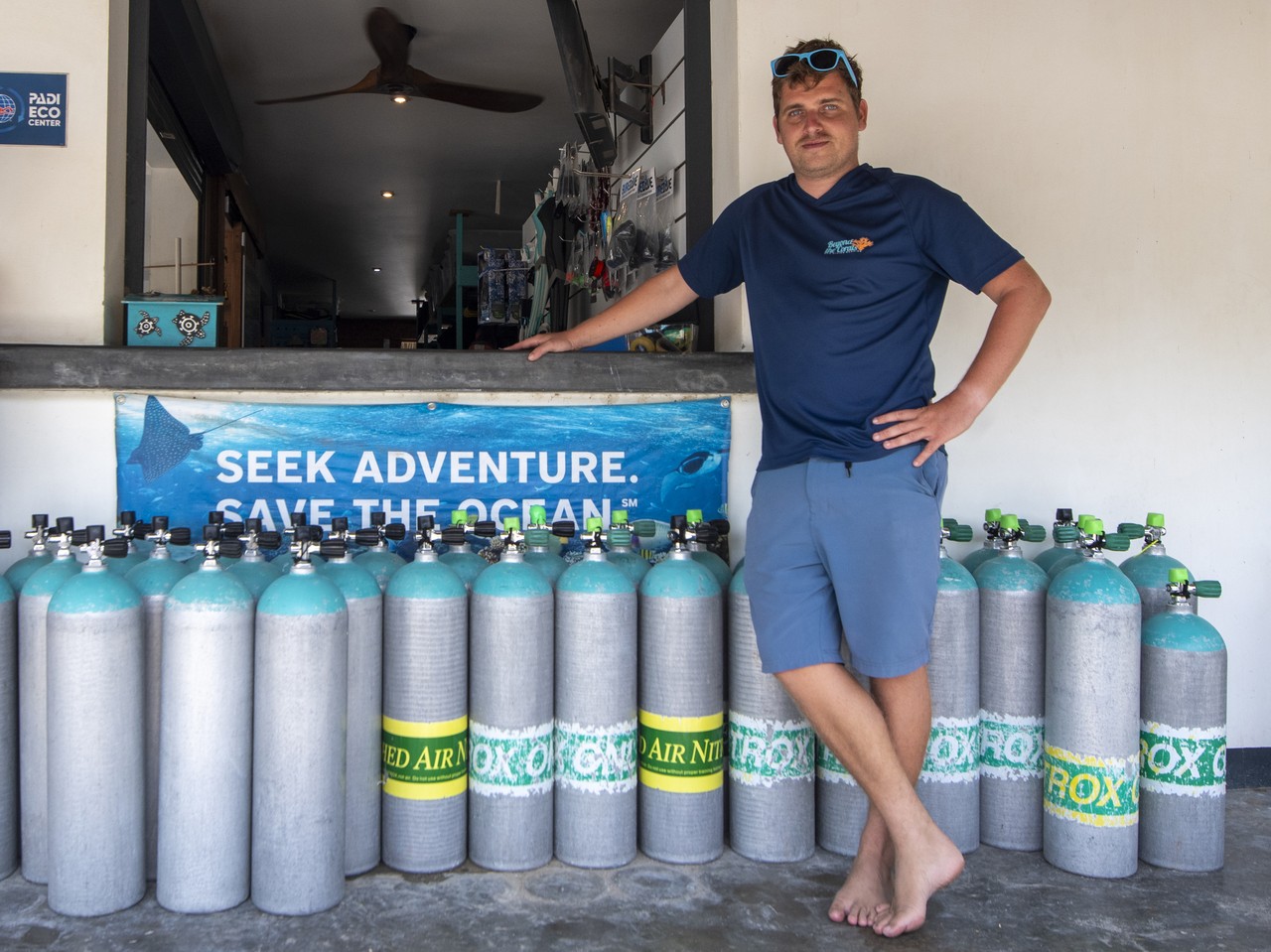
The national media spoke of a coral cover of only around 5 percent. Where does that specific measurement come from?
"That 5 percent is based on very recent fieldwork whose scientific publication had yet to appear at the time. If you take that number at face value, it looks as if the whole island is dead underwater. But the official report of the Global Coral Reef Monitoring Network (GCRMN), based on data up to and including 2024, arrived at an average of 14.1 percent coral cover for Bonaire. Those figures don't even have to contradict each other: the exact location, the depth, the year of measurement and the method used determine the outcome. An average never tells you what every metre of reef looks like. Research shows, for example, that Bonaire's rugged, hard-to-reach east coast is in many places still much healthier, more colourful and more diverse than the more densely populated west side. Moreover, we have to stop acting as if this is an exclusively Bonairean problem. It is a global crisis underwater. From the Great Barrier Reef in Australia to the Red Sea and the Pacific Ocean, climate change is damaging coral everywhere."
Some critics and analysts claim that local measures and small-scale coral restoration are a drop in the ocean. What is your view on that?
Martijn: "That is an absolute misconception and needlessly demotivating. Well-managed and actively protected reefs demonstrably show much more resilience locally. Of course, we can't solve global warming and CO2 emissions single-handedly from the shores of Bonaire. But local restoration, in-depth research, better water quality and reducing local stress factors do determine how much of the reef survives the next heat shock. It gives nature a buffer and a chance to recover. That is not a drop in the ocean; that is precisely what nature conservation is fundamentally about. Yes, it can be intensely frustrating when a piece of coral that has been worked on for years still takes a hit during an extreme heatwave. Nature restoration simply comes without guarantees. But giving up certainly does: then you know for sure you will lose everything."
 On Bonaire we often talk about the economic value of the reef for tourism. But its ecological function goes much deeper than that, doesn't it?
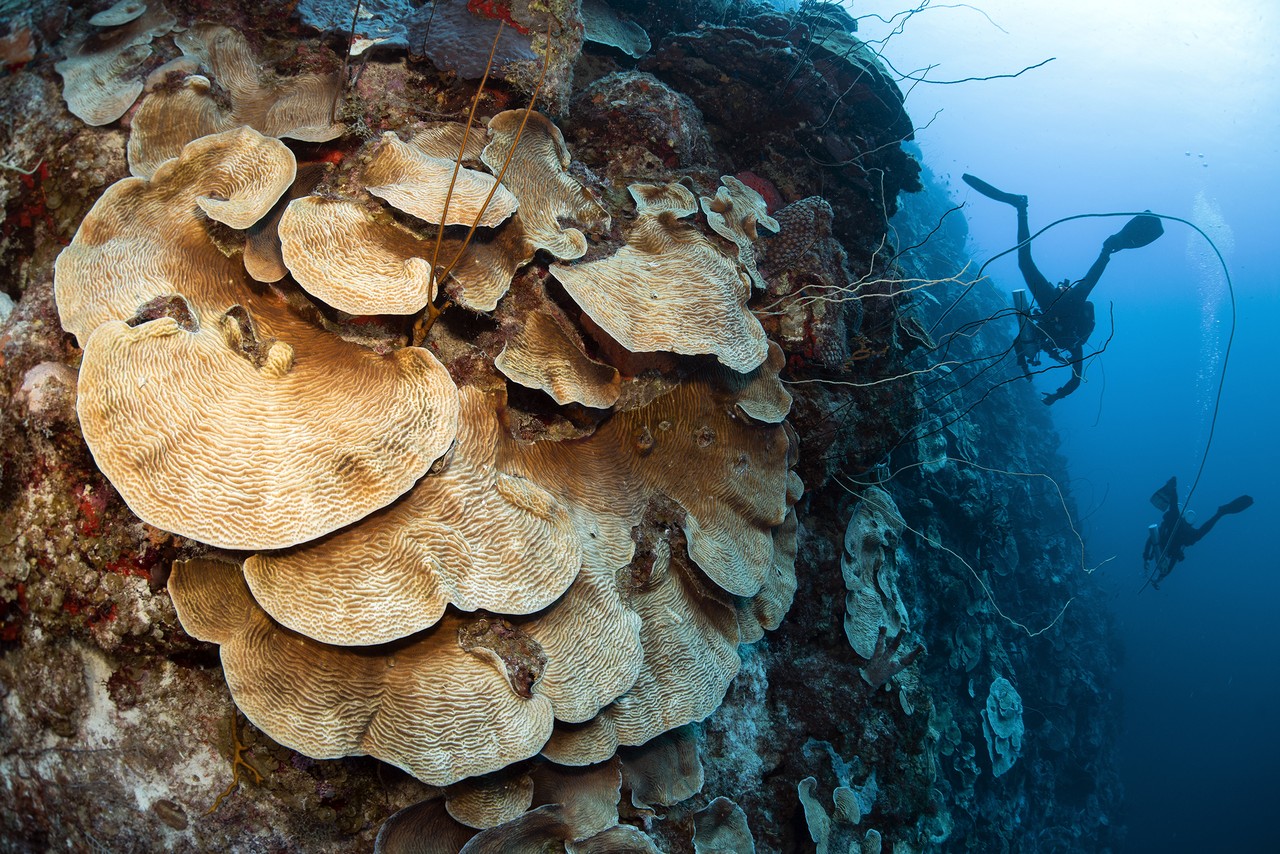
"Absolutely. The coral reef is not a tourist attraction that we can simply write off or replace when it is no longer economically viable. Coral reefs cover less than one percent of the total seabed worldwide, yet they support at least a quarter of all marine species on Earth. They are of incalculable value for biodiversity and global food supply. There is also a very practical aspect: healthy reefs can absorb up to 97 percent of the energy of incoming waves. Coral therefore functions as natural coastal protection. When the coral disappears, it is not just the colours and the fish for the diver that disappear; the land itself also becomes physically more vulnerable to the power of the ocean."
 What happens underwater often remains invisible to politicians and the general public in Europe. How do you break through that blind spot?
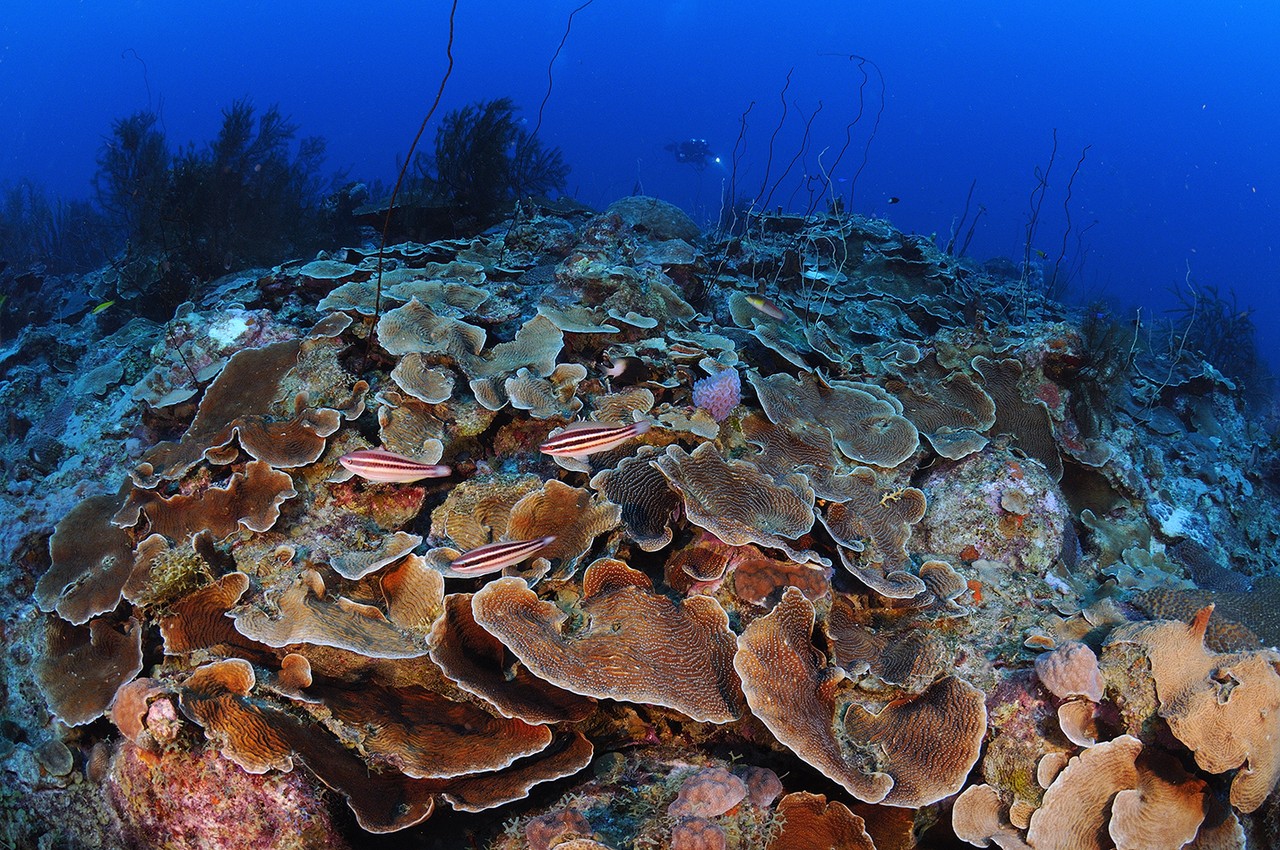
"That is perhaps the biggest challenge of our time. If thousands of hectares of forest in the Netherlands suddenly died off through drought or disease, if the entire Veluwe turned into a bare, dead plain, the social and political pressure would immediately be astronomical, because everyone would see the images. But underwater, you can't see the decline from the shore. Today, the Caribbean Sea still looks breathtakingly clear, idyllic and deep blue from the beach. Meanwhile, just below that mirror-smooth surface, an ecosystem that took hundreds or thousands of years to develop is changing dramatically in a short space of time. It is the duty of scientists, divers and the media to give that underwater world a voice and to make reality visible."
 There is now also a court ruling on the protection of the island. How urgent is the political situation at the moment?
Martijn: "The legal reality puts its finger on the sore spot. In the Greenpeace climate case, the court in The Hague ruled that the Dutch State is not doing enough to protect Bonaire against the consequences of climate change. The judge stated in no uncertain terms that the island's particular vulnerability has been known for some thirty years, and that the State must come up with a concrete climate adaptation plan. The fact that the cabinet subsequently decided to appeal parts of that judgment makes the contradiction painfully visible. While organisations, researchers and residents work incredibly hard every day on protection and recovery locally, the structural measures against the biggest global causes are moving far too slowly. As long as short-term interests around fossil fuels outweigh effective climate policy, locally it remains a case of mopping the floor with the tap running. But for us that is no reason to stop mopping; it is precisely a reason to tackle that tap far more forcefully together as well."
What is your most important message to the divers and biologists who will be coming to listen to your presentation at Duikvaker?
Robin: "Please don't write Bonaire off. Serious does not mean the same as lost. A lot is gone, but there is still an enormous amount worth fighting for. There are still beautiful reefs, impressive coral structures and countless animal species that depend on this ecosystem, such as turtles, rays and parrotfish. Don't expect an untouched reef straight out of a nostalgic nature documentary from 1970 when you visit. But come precisely because an extraordinary ecosystem still lives here that is worth seeing, understanding and actively protecting. Divers can be trained intensively to become an essential part of the solution rather than mere spectators. The current state of the coral is no reason to throw your hands up and stay away; it is an urgent cry for help to take much stronger action now. We simply don't get a second chance."
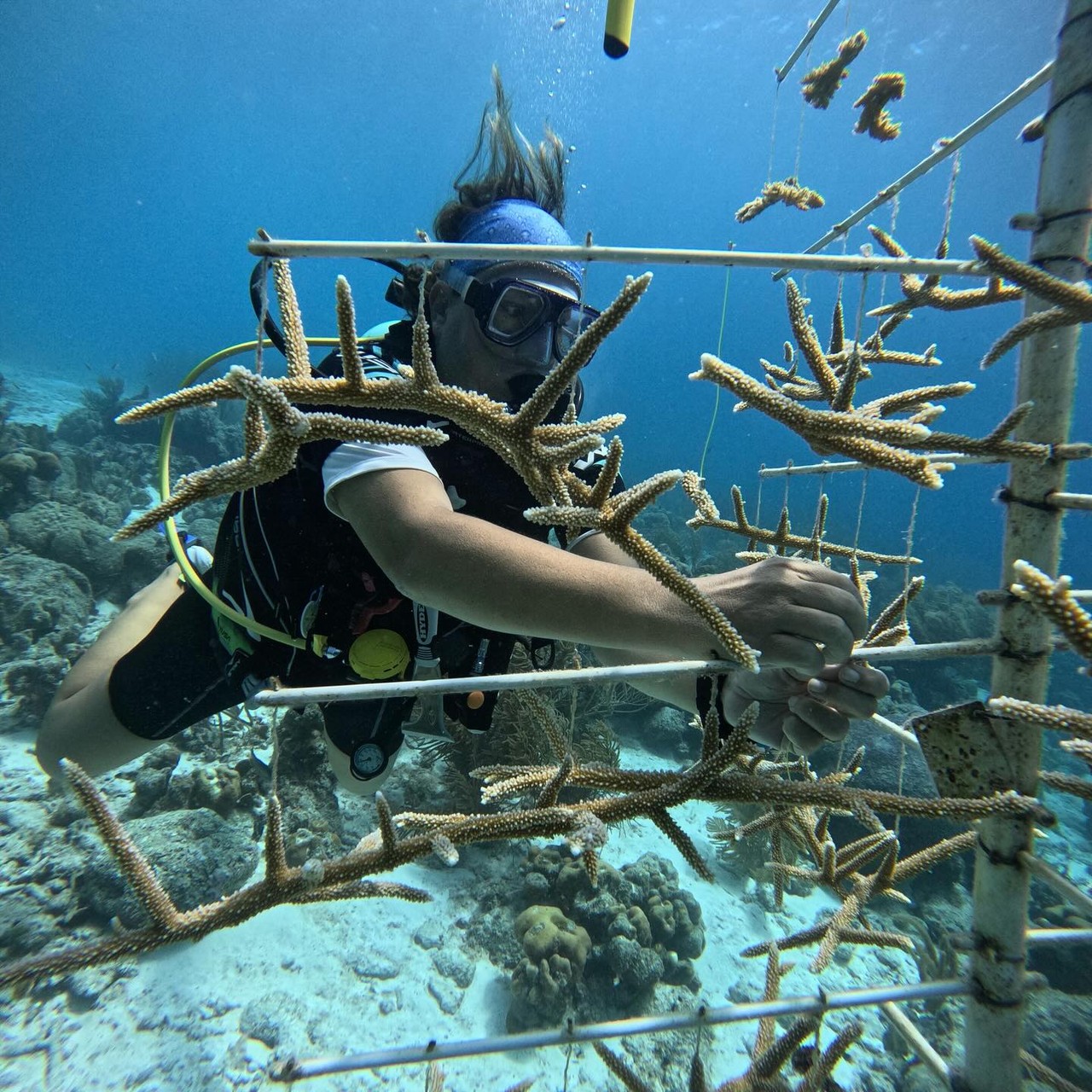
On Saturday 6 and Sunday 7 February, at 16:00, on stage 1, Robin Arens speaks at Duikvaker about THE CORAL OF BONAIRE AND the nuance behind the figures. See you in Houten!
At a glance
- What
- Interview with Robin Arens and Martijn Reinalda on Bonaire's coral decline, the nuance behind the figures and the case for local reef protection.
- When
- Duikvaker fair on 5, 6 and 7 February; Arens speaks on 6 and 7 February at 16:00.
- Where
- Expo Houten, stage 1, the Netherlands; the subject is the reef around Bonaire.
- Who
- Robin Arens (Beyond the Corals) and Martijn Reinalda, with research from WUR and GCRMN.
- Why
- A fatalistic NOS headline risked apathy among divers and policymakers, while the reef still has much worth protecting.
- How
- Through active local restoration, research, better water quality, fewer local stressors, trained divers and stronger climate policy.
Key facts
- GCRMN reports 14.1 percent average coral cover for Bonaire (data to 2024).
- A NOS headline cited about 5 percent coral cover.
- Bonaire's east coast is healthier than the more populated west side.
- Reefs cover under 1 percent of the seabed but host a quarter of marine species.
- Healthy reefs absorb up to 97 percent of incoming wave energy.
- The Hague court ruled the State does too little for Bonaire.
- The Dutch cabinet appealed parts of the Greenpeace climate case ruling.
- Robin Arens speaks at Duikvaker, Expo Houten, 6 and 7 February, 16:00.
Frequently asked questions
How much coral is left around Bonaire?
How much coral is left around Bonaire?
Is the coral reef of Bonaire lost?
Is the coral reef of Bonaire lost?
Does local coral restoration on Bonaire make a difference?
Does local coral restoration on Bonaire make a difference?
What did the Hague court rule about protecting Bonaire?
What did the Hague court rule about protecting Bonaire?
When and where does Robin Arens speak about Bonaire coral at Duikvaker?
When and where does Robin Arens speak about Bonaire coral at Duikvaker?
Keywords
- koraal Bonaire
- koraalbehoud Bonaire
- koraalbedekking Bonaire
- Robin Arens Beyond the Corals
- koraalherstel Caribisch gebied
- koraalrif Bonaire bescherming
- Duikvaker sprekersprogramma
- Bonaire duiken koraalrif