
Wisdom comes with age: go snorkelling!
A talk by underwater photographer Peter de Maagt on snorkeling with large marine animals such as gannets, orcas and Mobula rays. At 15:00 during the upcoming Duikvaker edition in Stage 1 at Duikvaker. Destinations covered: Shetland Islands, Norwegian fjords and Baja California Sur in Mexico.
At the upcoming edition of Duikvaker, underwater photographer Peter de Maagt will take the stage once again (at 15:00 on Stage 1) with a message that is as surprising as it is refreshing. Where he once sought out the depths as a "hardcore" diver, weighed down with kilos of equipment, he now increasingly looks for ultimate freedom at the water's surface. Armed with nothing but a mask, snorkel and fins, he captures the most spectacular and charismatic marine animals. From hunting orcas in the ice-cold Norwegian fjords to the synchronised underwater dance of thousands of mobula rays in Mexico. In the run-up to the fair, we spoke to him about his passion, his transition to snorkelling and why a snorkelling adventure changes the way you look at nature forever. A few years ago, Peter gave a similar presentation that drew a great deal of response. So, by popular demand, part two is coming, with new destinations added.
Peter, you are an established name in underwater photography and have dived in the most extreme places, from Greenland to Antarctica. Now you are coming to Duikvaker to talk about... snorkelling. Is heavy diving gear definitively a thing of the past?
"Definitely not for good, but wisdom comes with age! I used to go purely for hardcore diving holidays. I was constantly deep under water, but as a result I actually saw nothing of the country. The turning point came during a fantastic trip to Sri Lanka. A guide said to me, very matter-of-factly: 'You don't have to dive at all to experience all this. In fact, you'll miss everything beautiful on land if you go straight back home now.' That has always stuck with me. If you snorkel and combine it with time on land, a trip becomes much less 'selfish'. You experience the destination as a whole. And the best part: you absolutely don't have to lug heavy tanks on your back to come face to face with the most impressive and exciting animals on earth."
Your articles are bursting with energy. Let's start with the Shetland Islands, where you snorkelled with northern gannets. You describe it under water as an "absolute madhouse". What exactly happens there?
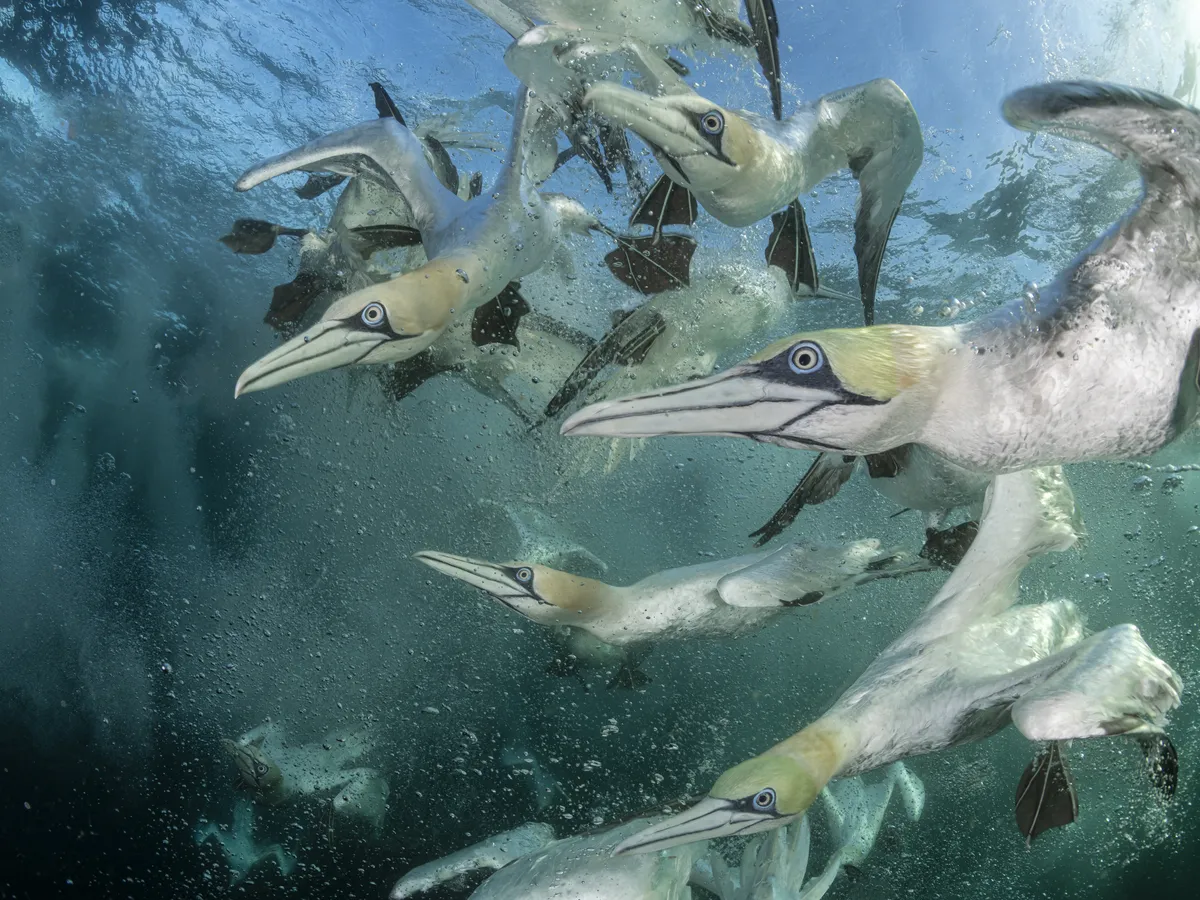
"It's pure chaos under water, a luxury problem for a photographer! We were in a small boat right next to the gigantic, steep cliffs of the island of Noss. Northern gannets are the largest seabirds of the archipelago, with a wingspan of almost two metres. When they spot a fish from the cliffs, they fold their wings tightly along their bodies and plunge into the water like a living torpedo at a speed of almost 100 kilometres per hour.
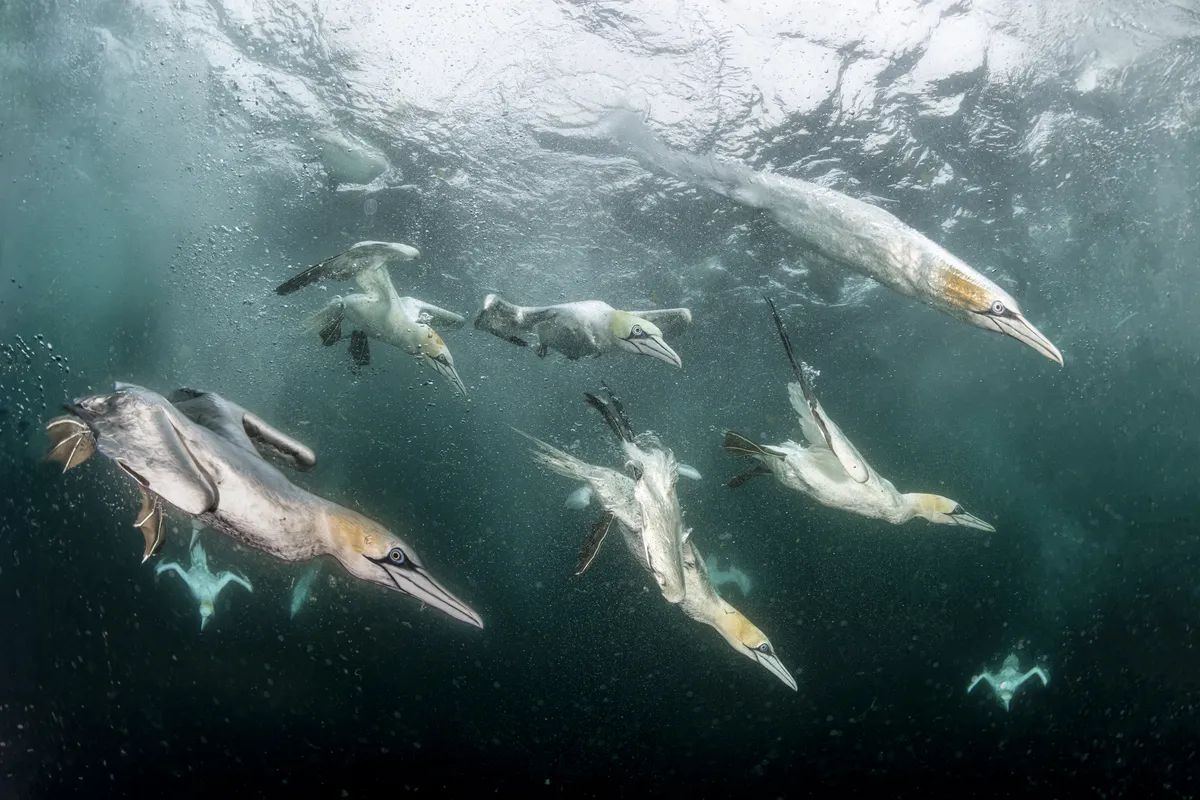
As soon as you put your head under water, the sea boils. Bubbles rise everywhere and you hear dull thuds: doempfff, doempfff… Those are the birds striking around you like acoustic bombs, sometimes just a few centimetres from your fins. For the first few metres they are completely wrapped in a silver blanket of air bubbles. When those bubbles come loose, you see them swimming after the fish under water. It's a comical sight, by the way: above water they are majestic, elegant birds with golden-yellow heads and sleek black eyeliner, but under water they transform from a streamlined torpedo into a kind of clumsily swimming chicken. Just try taking a harmonious photo of that when everything is moving around you at lightning speed."
Besides the spectacle in the water, what makes the Shetland Islands so appealing to you as a photographer?
"The landscape is mysterious and rugged: vast, rolling green hills and gigantic cliffs rising vertically out of the ocean. It's always windy and the weather can be raw, but that is precisely what creates that magical atmosphere. You don't go to Scotland for the weather, but the cold currents do push an enormous amount of nutrients to the surface. That attracts almost a million nesting seabirds.
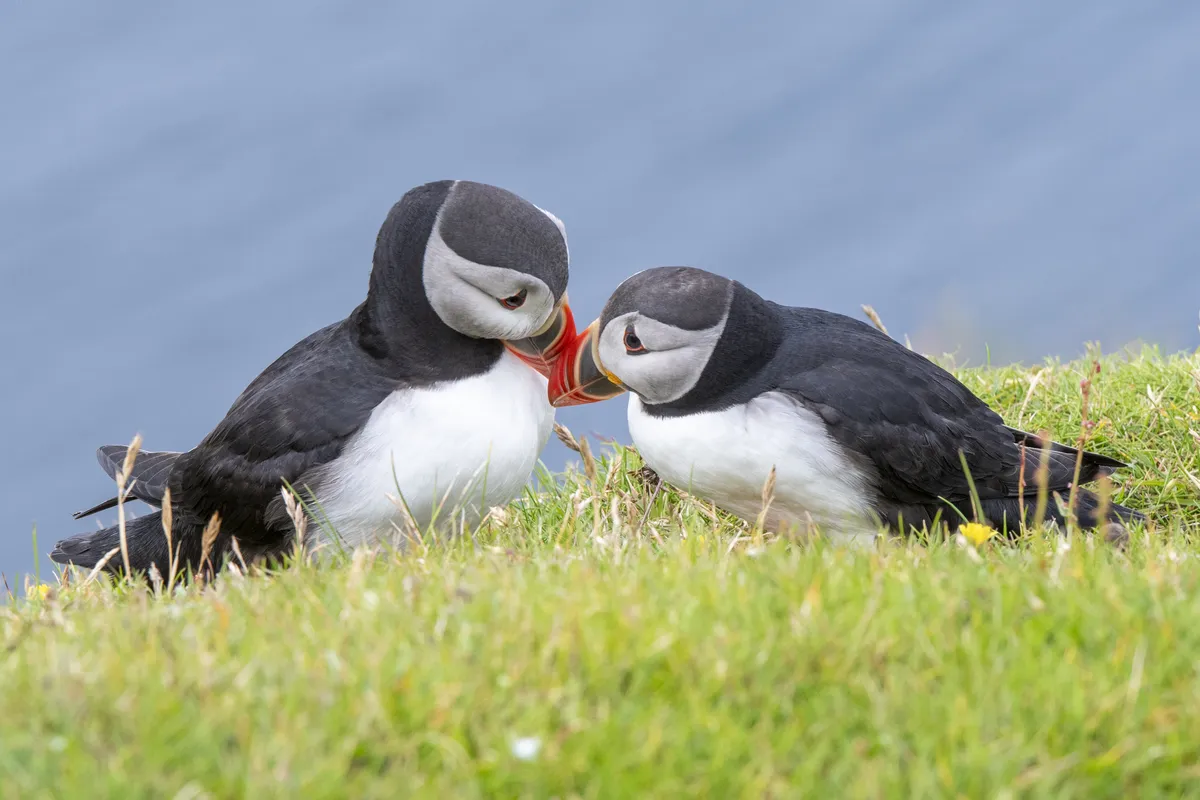
When you climb the cliffs of Hermaness, for example (a tough but beautiful hike), you find yourself among the colonies. No photo can convey the intense smell and the cacophony of all those thousands of chattering birds. And on top of those cliffs you find the puffins. They are the absolute clowns of the sea. They are no bigger than a turtle dove, waddle like penguins and live in old rabbit burrows in the peaty soil. If you lie down quietly in the grass there, they simply waddle over to you out of curiosity, just like you see David Attenborough experience in his documentaries. And if you're lucky, you might also spot playing otters among the kelp beds along the coastline. That contrast between the raw action in the water and the pure charm on land is exactly what makes these snorkelling trips so rich."
From the raw Scottish cliffs to the ice-cold fjords of Norway. There you went looking for the ocean's ultimate apex predators: orcas. What is it like to be in the water with them?
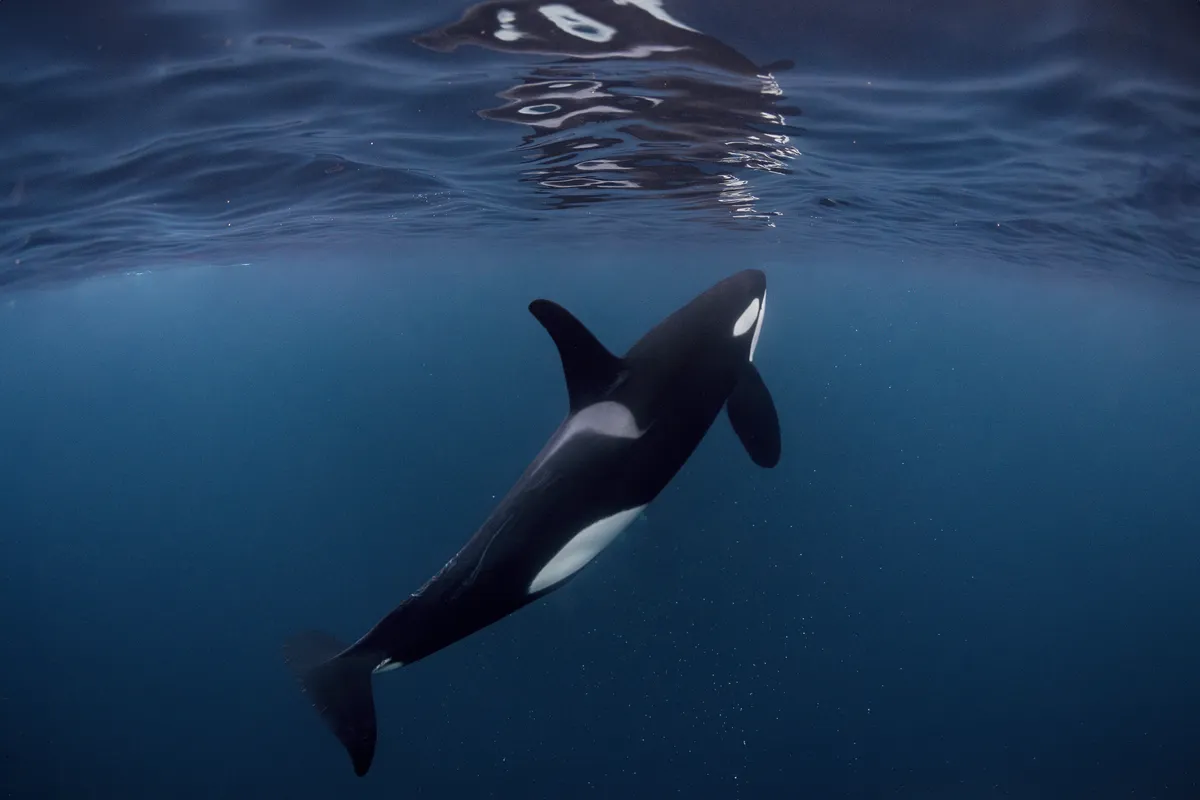
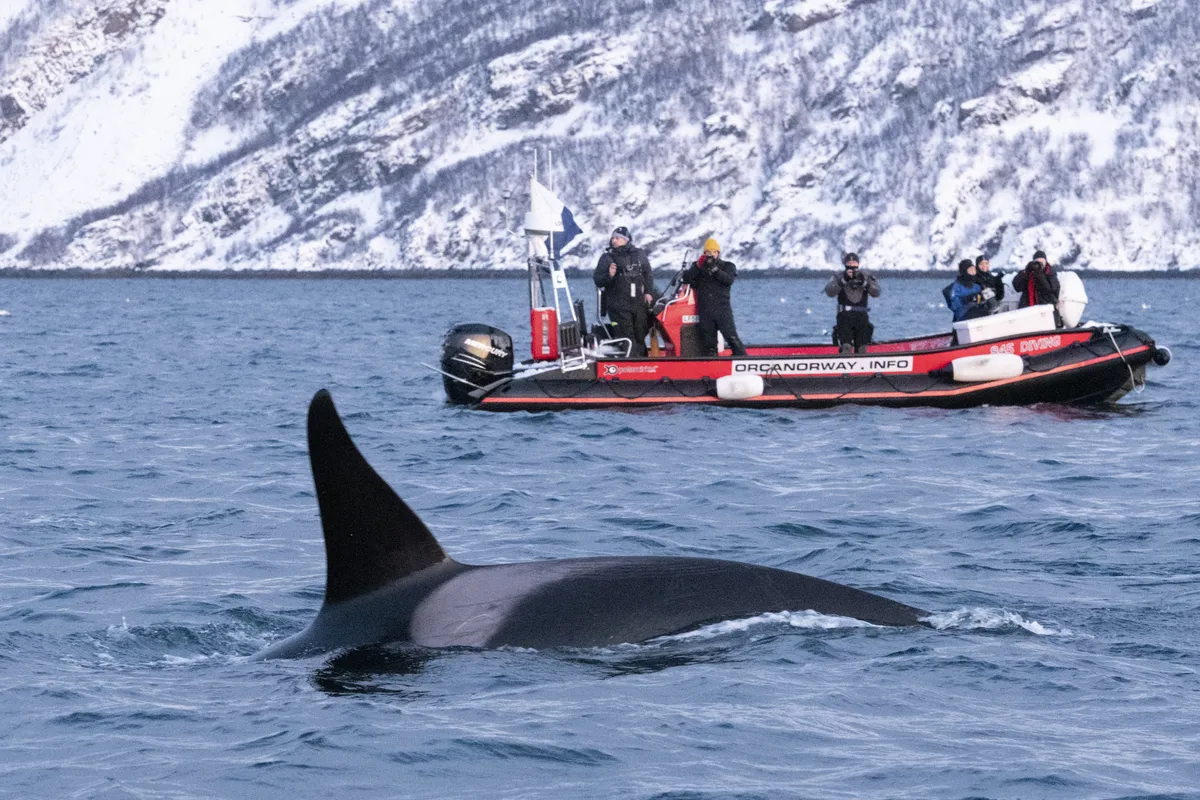
"That feeling is truly indescribable. At the end of autumn, some five billion herring swim into the Norwegian fjords. That enormous feast attracts the largest gathering of orcas in the world, often accompanied by giant humpback whales. We stayed on board the MS Sula, a converted fishing boat. Not a luxury cruise, but wonderful, minimalist Scandinavian simplicity. Below deck it was a kind of living Tetris to get your things into the cabins, but the atmosphere in the lounge and the food from the tiny galley made up for everything.
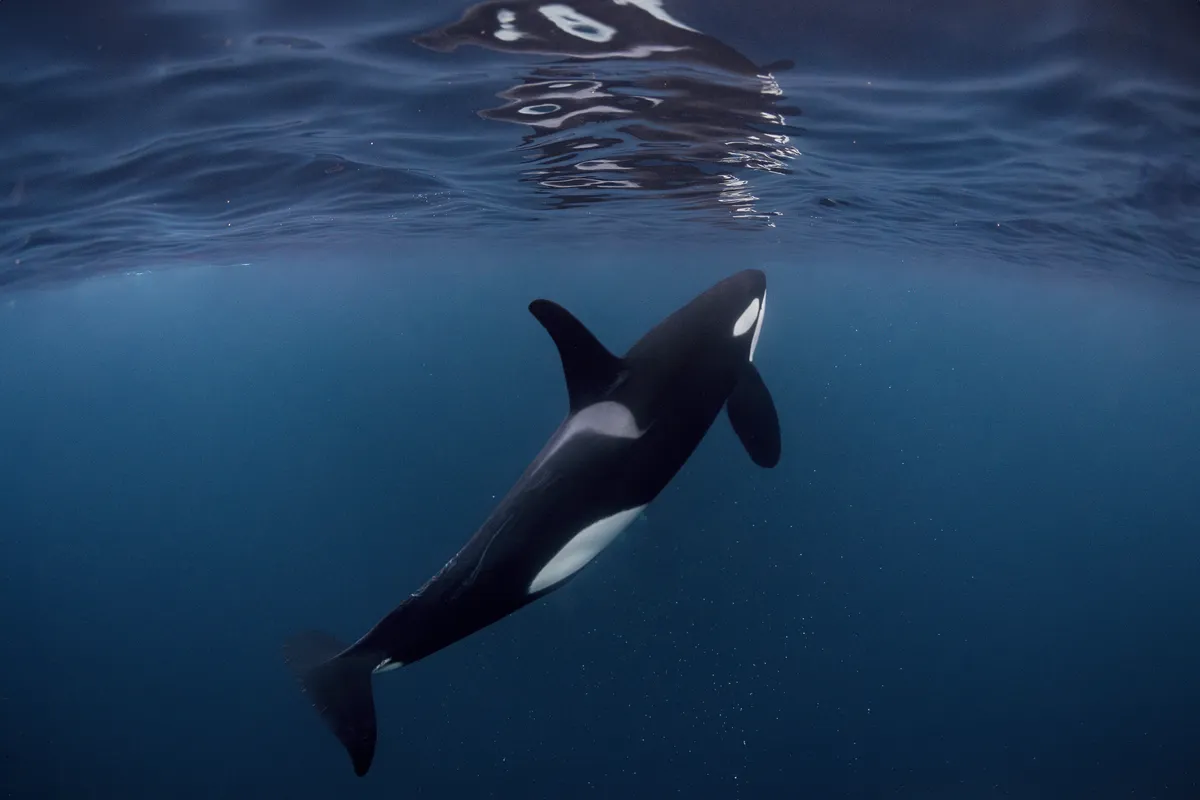
The snorkelling itself is done from a RIB. You sail around until you see the massive, triangular dorsal fins cutting through the water. As soon as a pod of orcas looks relaxed, the skipper manoeuvres the boat in their swimming direction and the command sounds: 'Go, go, go!' You slide into the water (which for me the first time, by the way, resulted in a gigantic, clumsy splash, so much for the stealth approach!). And then you hang there, in water of around eight degrees, while your lips slowly turn blue from the cold. Suddenly you see that iconic black-and-white pattern glide right beneath you. A mother orca looked me straight in the eyes and wanted to come closer, but the immense male (those fins can reach two metres high) gently steered her away. There is no aggression at all, they are purely focused on their own mission, but the sheer power and intelligence those animals radiate commands deep respect. You feel very small, in the best possible way."
You mention the intelligence of the orcas. Were you also able to observe their famous hunting techniques?
"Yes, the cooperative hunting of orcas is fascinating. During the expert's lectures on board we learned a lot about it, but it's even better to see the traces of it. In the fjords they herd the herring together into a compact ball, a so-called baitball. Orcas then swim into that ball and deliver a hard, targeted slap with their tails. The herring that are stunned by this are then eaten, one by one, very neatly. And do you know what's bizarre? They eat the herring fish by fish and spit the head, which consists mainly of bone, back out. Imagine that: one of the most efficient apex predators in the world, yet with impeccable table manners! And once the sun sets behind the snow-capped mountains, on land you are often treated to a spectacular show of the dancing, green-pink northern lights as well. It's an ice-cold adventure that lies far outside your comfort zone, but it leaves an indelible impression."
A completely different extreme is your recent trip to Baja California Sur in Mexico, also known as "the aquarium of the world". There you went looking specifically for mobula rays. How does that experience differ from snorkelling in the cold north?
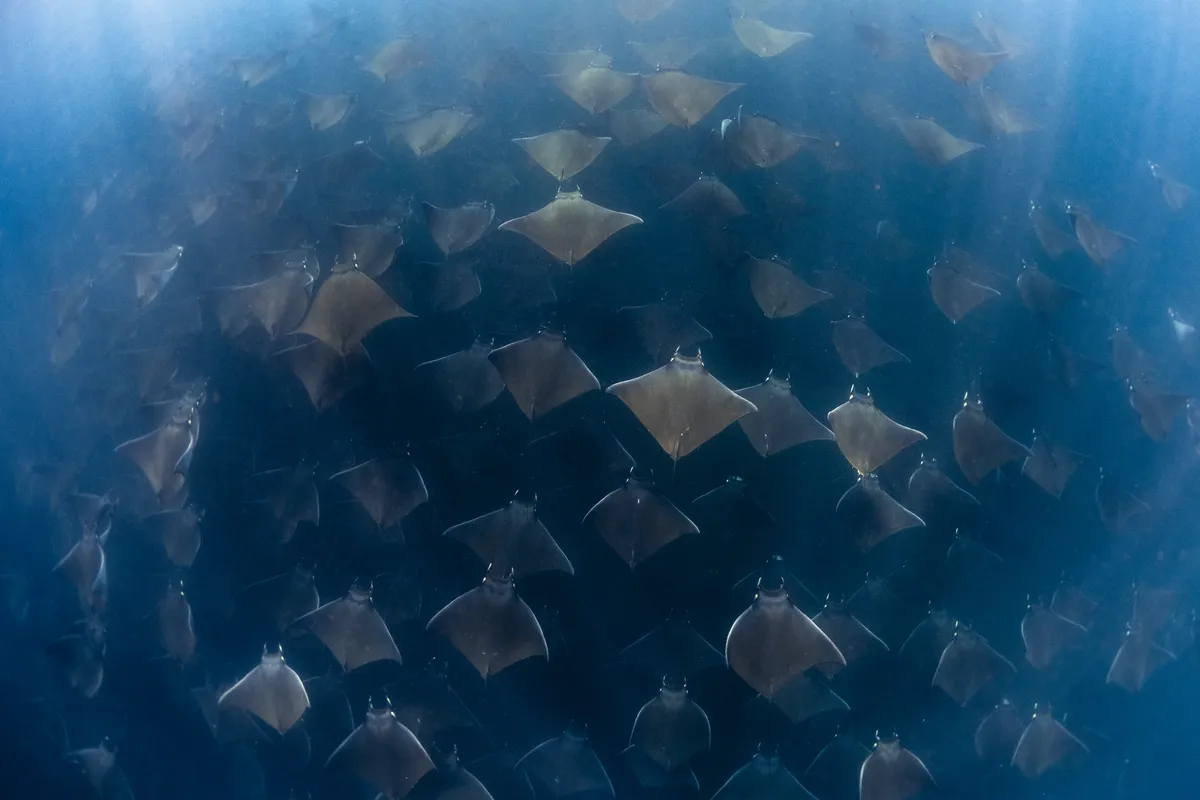
"Baja is a magical place where the bone-dry desert and rugged mountains merge directly into a crystal-blue, warm ocean. In spring, when the water warms up and seasonal currents cause an enormous explosion of plankton, thousands of Munk's devil rays (Mobula munkiana) gather there. This is a smaller relative of the giant manta ray, but they have exactly the same magical appeal.
Finding the schools is a craft in itself. Sometimes you see a huge dark patch moving below the surface from the boat, but often you scan for jumping rays. These are the so-called 'mating trains': a female swims just below the water surface and makes quick, sharp turns to choose a partner, while a train of males follows hot on her heels and performs acrobatic jumps above the water to impress her. The gigantic school follows right behind."
And what is it like to float amid such a "cloud" of thousands of rays?
"It's pure poetry under water. The water is wonderfully warm, visibility is sometimes as much as thirty metres and the sun's rays cut beautifully through the surface. As you approach the school, you first have to hover very calmly at the surface so that they can get used to your presence. If you move too fast or try to get too close, the school punishes that immediately: in the blink of an eye the whole group scatters. But if you stay calm, they glide beneath you in perfect synchronicity, in slow motion. At some point the school accepts your presence and you swim right among the rays. It's as if they briefly welcome you into their world. It gives a thrill that is indescribable."
Baja California Sur turned out to have even more surprises in store, because orcas suddenly appeared there too?
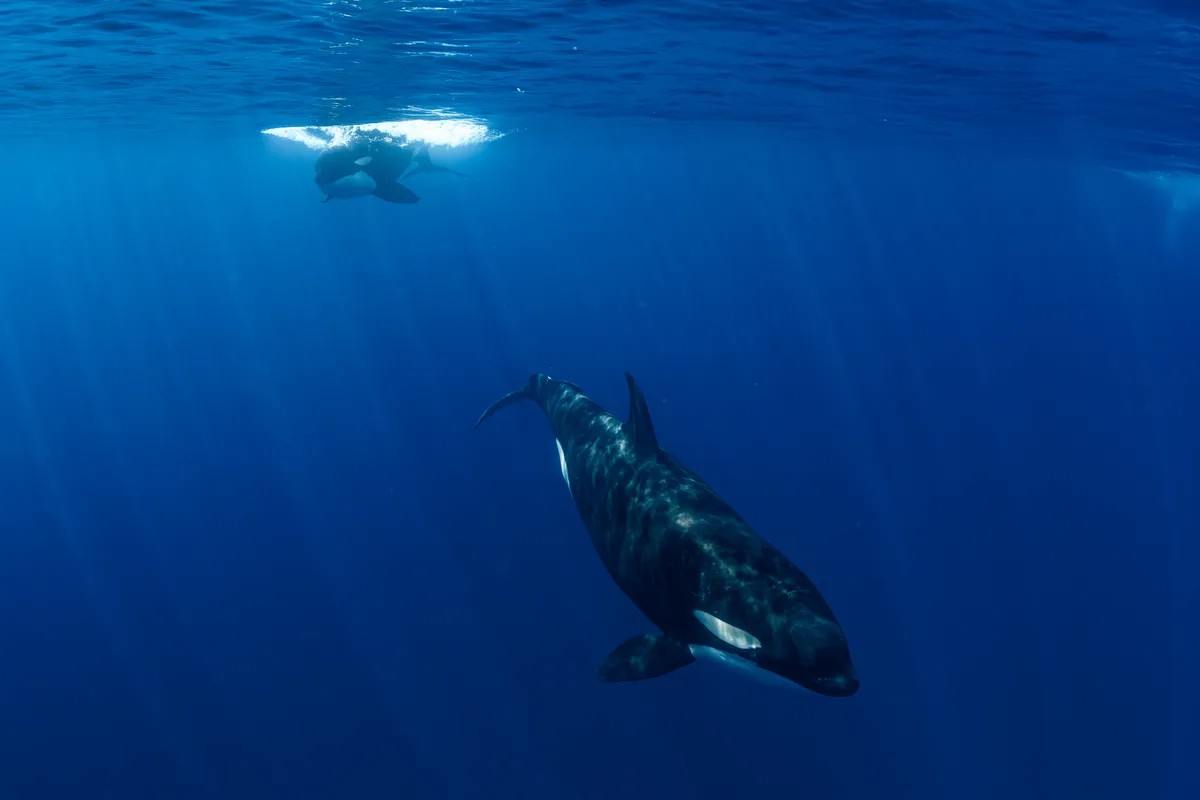
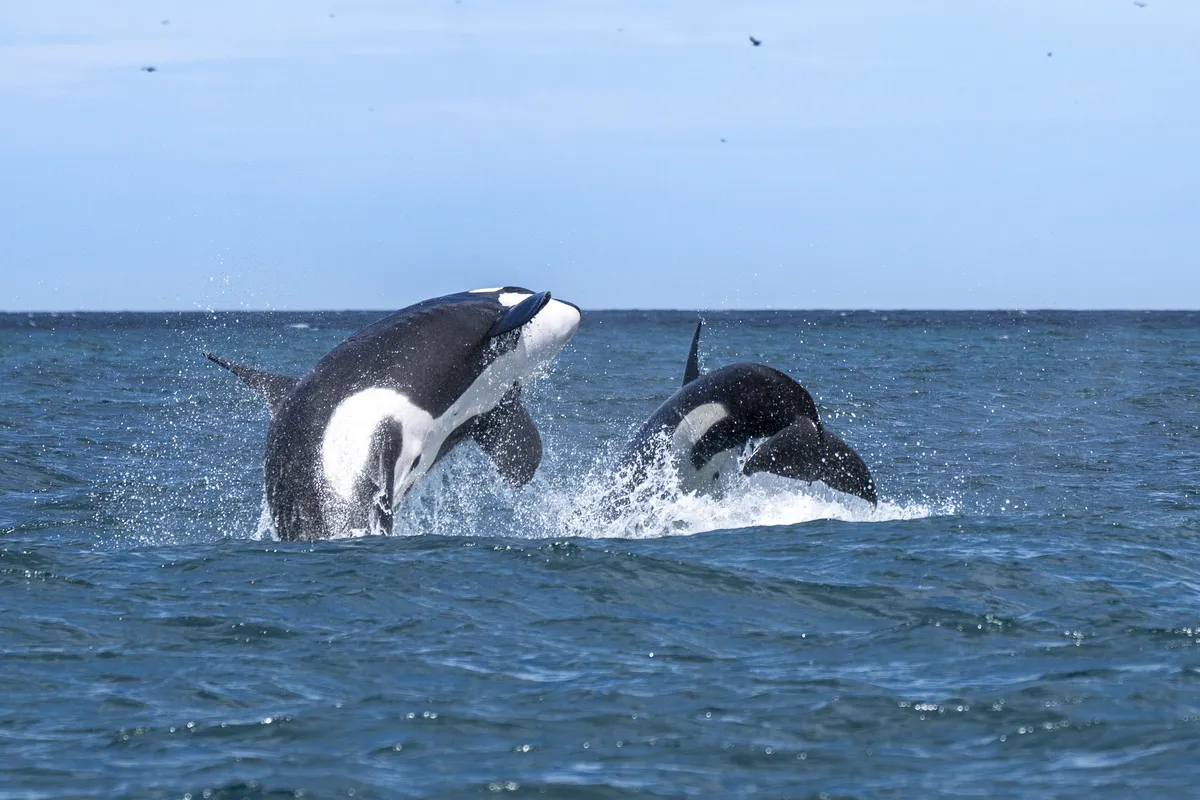
"Yes, that was the ultimate bonus! The guides tried to keep expectations low, because nature can't be directed. But when the skipper suddenly guns the engine and there's frantic talk over the ship's radio, you know something special is going on. We saw the orcas there twice. The first time they were actively hunting the mobulas. The water was boiling and bubbling on all sides. The second time we were allowed into the water as the group swam calmly past. To see those apex predators coming straight at you in clear, warm water for once... magnificent!
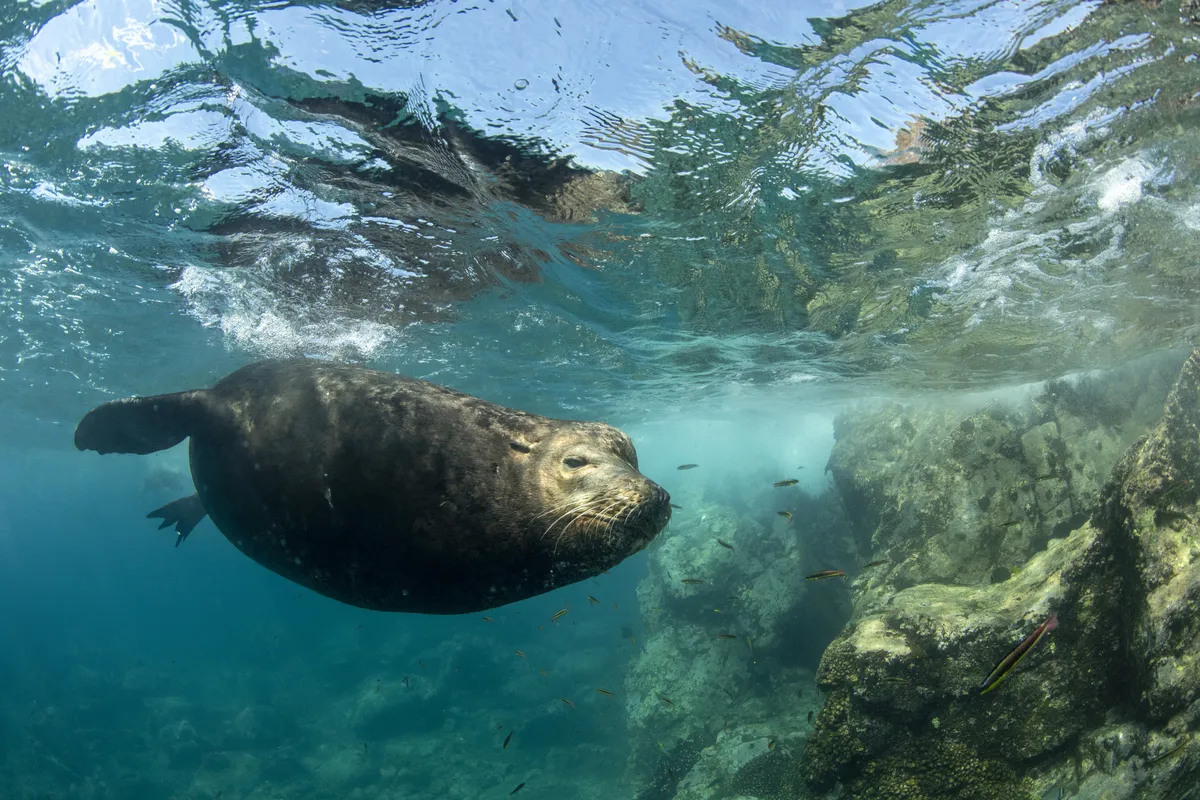
And if the rays or orcas aren't around for a day, you simply go snorkelling with the local sea lion colonies. They are incredibly playful and curious. You just have to be a little careful with the big bull. If he starts blowing bubbles or barking under water, it's time to quickly go snorkel a bit further along. Oh, and I also found out that in the little fishing harbours you have to be careful about wiggling your fingers under water at pelicans. Before I knew it, I was surrounded by dozens of hungry birds. I think I'm one of the few people on earth who can say he's been bitten in the ear by a pelican!"
Your photos are not only beautiful to look at, there is also a clear mission behind them. What do you hope to achieve with your presentation at Duikvaker?
"My goal with underwater photography is very simple: if my images can in any way contribute to the admiration and protection of the underwater world, then I'm happy. That's all it is, but certainly nothing less. I want to show visitors at Duikvaker that the barrier to experiencing this magic is much lower than people think. You don't need to complete complicated diving courses or lug around lead-heavy equipment to come face to face with the wildest secrets of the ocean. With a simple snorkel set, a world full of adventure, adrenaline and poetry is waiting for you at the surface. Come and see, get inspired and above all, jump into the water yourself!"
Peter de Maagt speaks at Duikvaker at 15:00 on Stage 1 about his snorkelling adventures with large and charismatic marine animals.
At a glance
- What
- A talk by underwater photographer Peter de Maagt on snorkeling with large marine animals such as gannets, orcas and Mobula rays.
- When
- At 15:00 during the upcoming Duikvaker edition.
- Where
- Stage 1 at Duikvaker. Destinations covered: Shetland Islands, Norwegian fjords and Baja California Sur in Mexico.
- Who
- Underwater photographer Peter de Maagt, speaking to Duikvaker visitors.
- Why
- To show that experiencing the underwater world is easier than people think and to build admiration and protection of it.
- How
- With a simple snorkel set (mask, snorkel and fins), combined with time on land during the trip.
Key facts
- Peter de Maagt speaks at 15:00 on Stage 1 at Duikvaker.
- His talk is part two, with new destinations added.
- He photographs sea animals with only a mask, snorkel and fins.
- Northern gannets dive at nearly 100 km/h at Noss, Shetland.
- Almost one million breeding seabirds gather around the Shetland Islands.
- Norwegian fjords draw about five billion herring in late autumn.
- Orca water in Norway is around 8 degrees Celsius.
- Baja California Sur visibility reaches up to 30 meters in spring.
Frequently asked questions
When and where does Peter de Maagt speak at Duikvaker?
When and where does Peter de Maagt speak at Duikvaker?
Why does Peter de Maagt prefer snorkeling over diving now?
Why does Peter de Maagt prefer snorkeling over diving now?
Where can you snorkel with orcas according to Peter de Maagt?
Where can you snorkel with orcas according to Peter de Maagt?
What can you see when snorkeling in Baja California Sur?
What can you see when snorkeling in Baja California Sur?
What happens when snorkeling with northern gannets in the Shetland Islands?
What happens when snorkeling with northern gannets in the Shetland Islands?
Keywords
- snorkelen met orka's
- Peter de Maagt
- onderwaterfotograaf snorkelen
- snorkelen Shetlandeilanden
- snorkelen met mobularoggen
- orka's Noorwegen snorkelen
- snorkelreizen
- lezing Duikvaker