
The Hidden Gems of the Backyard: In Dive Mode with Maxime Schaek
Interview with dive instructor and content creator Maxime Schaek about Benelux dive sites, her short dive videos and her project to film all Belgian dive sites. Ahead of Duikvaker 2027, held in February in Belgium and the Netherlands, including Vodelée, Barges in Doornik, Put van Ekeren, Zilvermeer and the Oosterschelde.
With a passion that runs deeper than the average quarry, dive instructor and content creator Maxime Schaek proves that you don't need to leave the Benelux for adrenaline and remarkable biodiversity. Armed with her camera, she brings the hidden underwater world of our own backyard to the screen in a way that is relatable and unfiltered. At the upcoming dive fair Duikvaker 2027, she will take the stage to debunk, once and for all, the stubborn prejudices about our local waters.
Maxime, what was the exact moment you decided: "Now I'm going to become a dive instructor"?
"I don't actually think there was one exact moment when I thought: now I'm going to become a dive instructor. It was always kind of the plan. I went on fairly quickly from 3*-diver to 4*-diver/AI. I completed that training in one year, and then, with a little gentle pushing from the people around me, I carried straight on towards instructor. My dad is a 2*-instructor himself, and I've always said: "I want to become at least what my dad is." We both have that competitive streak in us, so somewhere that obviously played a part too.
But the main reason is actually very simple: teaching is in my blood. In daily life I stand in front of a classroom, and I get an enormous amount of satisfaction from teaching people something and watching them grow. Diving is no different. I love guiding new divers, young and not so young, and training them to become good, independent and above all safe divers. Looking back now, becoming an instructor was simply a very logical next step."
 How do you combine your life as a teacher with the intensive hours underwater?
"It's a cliché, but teachers obviously get a lot of holidays. Although those holidays are often needed to recover from a pretty intense job, for me they are also the ideal time to dive a lot. Being underwater means complete freedom to me. It's one of the few moments when my head truly goes quiet. In that sense, I also use my holidays to clear my mind.
Still, the combination can be quite tough at times. The diving itself is actually the least of the problems, if you can even call diving a problem. It's mostly everything that comes after. After a day of teaching and marking, I sometimes sit at my computer for hours selecting footage, editing videos, recording voice-overs and finishing content. That's the part people often don't see.
During the school year I therefore dive a lot less than during the holidays. On Wednesday evenings we have training with our dive club, and on Sunday mornings we usually dive in Barges, a quarry in Tournai. However, with my project to film all Belgian dive sites, I've of course given myself some extra work. As a result, my diary is a bit fuller these days, and quite a few free weekends have become dive weekends too. But in the end I'm lucky that, as a teacher, I have periods in which I can really live that passion to the fullest. And for me, a day underwater still feels more like recovering than like a busy day."
Do students at school learn to look at nature differently thanks to your diving stories?
"I wouldn't dare call them children anymore. I teach the third stage of secondary school, so my students are usually 17, 18, 19 and sometimes even 20 years old. Although they can still occasionally act pretty childishly, of course. The nice thing is that I teach social studies. It's a subject where I have quite a lot of freedom and where you can bring in lots of real-world themes. I mainly teach in vocational education, or labour-market-oriented education as it's called these days, and every now and then we wander off topic during a lesson. It usually doesn't take long before someone asks a question about diving.
I notice that they are genuinely curious about it. For many of my students the underwater world is something completely unknown, something they might otherwise never come into contact with. So when they ask, I gladly take the opportunity to 'indoctrinate' them a little. Before long some underwater footage comes out, and I tell them more about everything you can see down there.
During my instructor training it was sometimes even the other way around. I regularly sat studying my summaries during my breaks, and my students of course saw that. Then I'd hear: "Come on, miss, we're going to quiz you." And they would sit there asking me questions about, among other things, the laws of physics that a diver needs to know. They were quite impressed every time it turned out I had really mastered my material. For once, the roles were reversed.
Whether it makes them all look at nature differently, I don't know. But I do think I make them curious about a world they might otherwise ignore. And social media helps enormously with that. For young people it's simply a very important window on the world, and plenty of my students are happy to follow my diving adventures there. If one of them thinks, hey, that underwater world is actually really special, then I already find that wonderful."
 Which personal quality makes you a better diver and content creator?
"Tough question, because creativity is of course very important for content creation. But if I really have to choose one quality that characterises me as a diver, as a content creator and honestly just as a person, it's perseverance. I'm not a quitter. If I really want something, I go all in and do everything within my power to make it work.
As a diver, that mainly means I never want to feel that I've 'finished learning'. Quite the opposite. I'm convinced that, as a diver and as a person, you can always keep learning. Equipment evolves, techniques change, and our knowledge of diving and the underwater world keeps developing too. I think it's important to stay open to that, to look critically at yourself and to keep improving.
Content creation works in exactly the same way. Some videos do incredibly well and others far less so, even though you sometimes put in just as much time and energy. You can let that discourage you, but in the end you simply have to keep going and, above all, keep making what you enjoy making yourself. It obviously helps that I genuinely enjoy both sides. I love diving, but I enjoy it at least as much to get to work on the footage afterwards and turn it into a story. As long as those two things stay fun, it's also much easier to persevere."
 Why do we underestimate the dive locations in the Netherlands and Belgium so much?
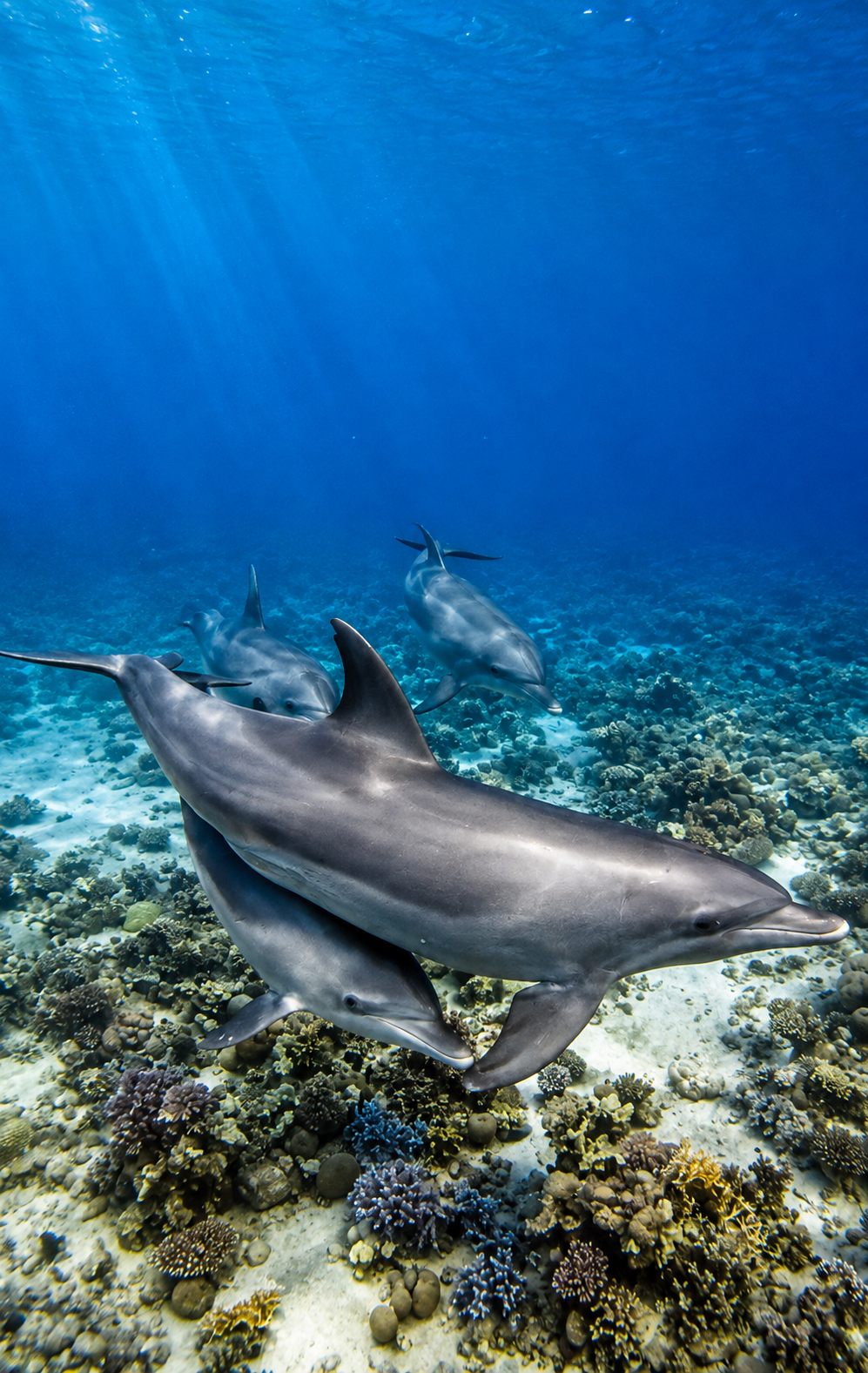
"I notice it very strongly when I talk to friends who don't dive themselves. When I ask whether they would ever want to dive, I often get the same reaction: "Here? No, far too cold, too dark, green water, and there's nothing in it anyway." But ask whether they'd like to dive or snorkel in Egypt, and suddenly it sounds a lot more appealing: warm water, good visibility, colourful fish… That's simply the image people have of diving.
And we shouldn't lie about it: diving in Belgium and the Netherlands can be cold and dark. Especially in winter. But that's only part of the story. We also have dive sites where visibility can be fantastic at certain times. The Put van Ekeren, for example: when the sun shines nicely into the water and the light falls across the water plants, you get truly beautiful scenes. And then of course there's the Oosterschelde, which is bursting with life.
I think many people hugely underestimate how much there is to see underwater here. Various fish species, seaweed, sponges and all kinds of small creatures that, as a non-diver, you have no idea live here. And there's much more colour in it than people expect. It may not be the classic tropical colour palette you see on Instagram, but it absolutely has its own beauty.
For me, one doesn't have to replace the other, by the way. I love diving in clear, blue, warm water, but I can enjoy a dive here just as much. In the end, one of the best things about diving for me is the complete calm it brings to my head. And for that it really doesn't matter whether I'm lying in cold, dark water or hovering above a colourful tropical reef. I actually love the variety between those two worlds. And maybe that's also what I want to show a little with my content: you don't have to fly to the other side of the world to make a special dive."
What did you miss most in the tropical dive videos on social media?
"I think mainly relatability. When you watch dive content on social media, I often see two extremes. On one side there's technical diving: rebreather divers going very deep, exploring spectacular wrecks or cave diving. Beautiful content and hugely impressive, but it doesn't always match what the vast majority of Belgian and Dutch recreational divers actually do.
On the other side you have the tropical dive videos. Whale sharks, schools of hammerhead sharks, crystal-clear blue water, colourful reefs… Of course fantastic to watch. I'd be lying if I said I don't get excited by it myself. But let's be honest: for the average Benelux diver, those are exceptional dives rather than the reality of every weekend.
So what I missed was the world in between. Ordinary recreational divers who gather their gear after work, drive to a quarry or the Oosterschelde at the weekend and have fantastic experiences there too. Content that makes someone think: hey, I could do this too.
I also think diving still struggles a bit with an outdated image, and I'd like to help break that. We need to make diving sexy again. Although 'sexy' may not be the first word that comes to mind when you've squeezed yourself into a 7 millimetre suit, are standing there with a jacket and a tank on your back, and are stumbling sweatily towards the water. But the sport itself is attractive. It's adventure, nature, freedom, travel, friendship and discovering something new every time. We just have to dare to show that in a contemporary and relatable way. That's exactly what I'm trying to do with my content."
 How does the traditional diving world react to your dynamic, short videos?
"Surprisingly positive, actually. I get an enormous number of lovely reactions from divers who are happy that there's finally some more relatable content about their own diving world. That genuinely does me a lot of good. People see a clip of a minute to a minute and a half, but don't always realise how many hours of work are behind it. When you notice that those videos come alive and people get enthusiastic about them, it's hugely motivating to carry on.
Of course you also get criticism on social media. I once received a negative comment, for example, because part of my diving equipment is sponsored. That person thought it was all pretty easy when you get things 'for free'. But of course nothing is truly free. A collaboration like that comes with agreements and content in return. A video of barely a minute can easily contain three hours of work: filming, selecting, editing, writing and recording a voice-over… You don't see that when you scroll through your feed.
I also notice that some divers of a slightly older generation sometimes have to get used to the pace of my videos. For them it occasionally goes a bit fast. But that's simply the language of social media today: you only have a few seconds to grab someone's attention. If you want to reach a younger audience, you have to take that into account. But on balance, at least 95 percent of the feedback is incredibly positive. And it's precisely the reactions from people who say "finally some footage of the dive sites we go to ourselves", or who feel like diving somewhere because of a video, that are my greatest motivation to keep going."
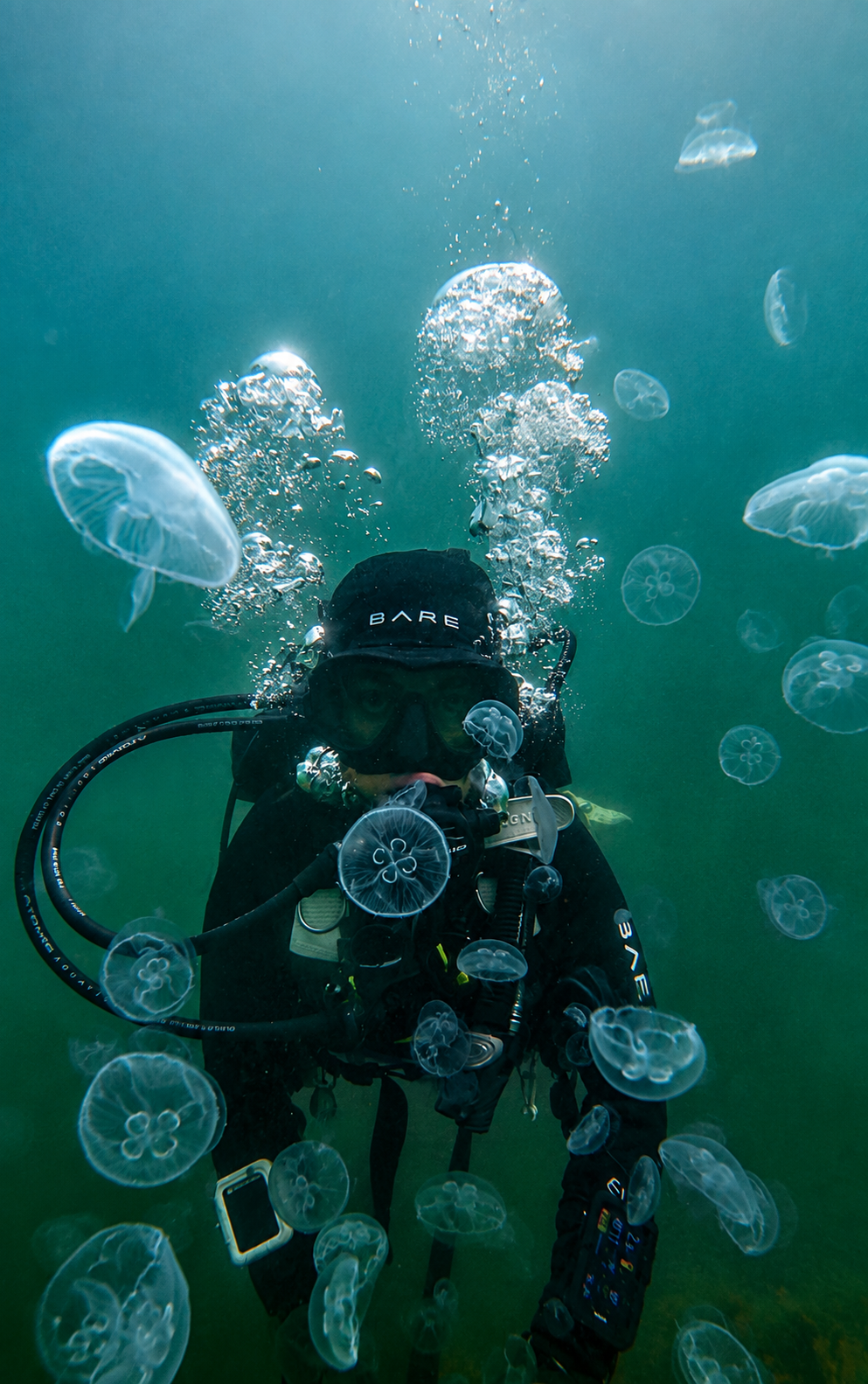 Are you already reaching a noticeably younger generation of divers with your TikTok reels?
"Yes, absolutely. I currently post my content on TikTok, Instagram and Facebook, and the difference between those platforms is actually very striking. On Facebook I mostly reach the older generation of divers, while TikTok clearly attracts a much younger audience. I focus most on Instagram myself, because that's where my own peers and slightly older divers are. At the moment that's actually my most important target group.
But I find TikTok at least as interesting, just for a different reason. Some of the young people who see my videos there may not yet be at an age where they'll start diving straight away. It's simply not a cheap hobby, and it also takes quite a lot of time and training. But that doesn't mean we can't get them excited now.
I see it a bit like planting seeds. If nobody in your family or circle of friends dives, you actually come into surprisingly little contact with the sport. You simply don't think of it as a possible hobby. By having a video suddenly appear among their regular TikTok content of someone jumping into the water in Belgium or the Netherlands, I hope something sticks: hey, this exists too, and maybe I'd like to try it someday. So not every view has to produce a new diver tomorrow. If, thanks to a clip like that, someone tries a first introductory dive in two or five years, then that TikTok has achieved its purpose for me too."
Which specific Belgian dive location has surprised you the most so far?
"Before I started my content, I had of course already visited quite a few Belgian dive sites. I just hadn't captured them all on camera yet. So if I really have to choose a place that surprised me during this project because I'd never dived there before, I'd say the Zilvermeer. I didn't have such a pronounced picture of it beforehand, but underwater you feel at certain moments as though you're almost in Atlantis. I found that a really special dive.
My personal favourites also remain Vodelée, Barges and absolutely the Put van Ekeren as well. I also got to know the latter in a completely different way during a scooter introduction with Florian Symoens. With an underwater scooter like that you cover much greater distances, so I got to places I would probably never reach on a regular dive. That suddenly gave me a completely different picture of a dive site I thought I already knew. Fantastic.
And that's exactly what's so great about this whole project: I keep discovering places that make me think afterwards: how come we talk so little about this? Belgium really still has plenty of hidden gems underwater. But if I have to put a few at the top of my list right now, the Zilvermeer, Vodelée, Barges and the Put van Ekeren are definitely my top picks."
What is the absolute must-dive top location that every recreational diver should visit?
"If we're really talking about Belgium and I have to choose one absolute must-dive, I'm going for Vodelée. For me, that dive site has everything. The visibility can be beautiful, you can get nice depth, there's plenty of fish, and along the way there are various sights to discover.
One of the absolute highlights for me is the sturgeons you can encounter at around 40 metres. They remain impressive animals, and when they suddenly appear in front of you, it really makes for a fantastic moment. Of course you need the right training and experience for that depth, but even on the shallower parts Vodelée is absolutely worth it. And it works above water too. There's a cosy clubhouse where you can have something to eat and drink after the dive, so you can easily turn it into a full day of diving. So if someone asks me: "I have time for one Belgian dive site, which one should I do?", I would say Vodelée right now without much hesitation."
What was your most challenging or funniest moment while filming underwater?
One I won't forget any time soon happened last summer during a dive at the Medes Islands in L'Estartit, Spain. I was still filming with my GoPro then, and it was normally always attached to me with a clip system. So when I stopped filming, I could simply let go of it without thinking. Only that day my dad had first filmed me while I jumped into the water. Afterwards he handed the GoPro back to me, and I had forgotten to clip it on again. During the dive I filmed something, stopped the recording and then did what I always did out of habit: I simply let go of my camera...
A few metres further on I wanted to film again, reached for my camera and… nothing. Gone. That gives you a serious moment of stress underwater. My dad was already swimming a little ahead of me, and I knew: if I first have to go and get him to explain that my camera is gone, I'll probably never find that GoPro again. So I immediately swam back and started searching.
Luckily there was a bright orange float attached to the GoPro. We were already quite deep, so it didn't float up to the surface anymore. It had ended up in the dense Neptune grass. Without that bright orange, I would really never have found it again. In the end I spotted it lying there and could simply take my GoPro with me again. Huge relief. Since then I check just a bit more often that my camera is actually attached to me before I let go of it."
 What is your ultimate personal goal in capturing all Belgian dive sites on camera?
"I simply want to show diving as it is. I had that in a very extreme way at the Blaarmeersen, for example. I honestly think I've never had such bad visibility anywhere. But even there I just made a reel out of it in the end. It was a bit shorter than my other videos, simply because I had less usable footage.
I think it's important to show that side of diving too. Not every dive has ten metres of visibility, and not every dive yields spectacular footage. Especially if you want to map out the Belgian dive sites, you also have to dare to show honestly what the conditions were like at the time.
That's why I deliberately don't edit my underwater footage to make it look better than it really was. Of course I edit my videos: I cut, paste and select the best parts. But afterwards I don't add filters or artificially make the image lighter or clearer. What you see in my videos is as close as possible to what I saw myself during that dive. If the visibility is bad, then it's bad. That's simply part of diving in our waters, and we shouldn't lie about it. It just means the reel might be a bit shorter that day. But that too is part of the story for me: I want to show not only how beautiful a dive site can be, but also how I really experienced it at that moment."
What message do you absolutely want to give the visitors of Duikvaker in February?
"Above all: spread the love. We divers no longer need to convince each other of how beautiful our sport is. We know what lies beneath that surface and what diving does to you. But I think we need to bring that much more to the outside world. For me, diving is so much more than just a sport. It's adventure, but at the same time one of the few things that completely calms me. And it gives you access to a world that remains literally hidden from most of the population.
For me there's also an important link with the environment there. I strongly believe you first have to know something before you can truly love and protect it. As a diver you automatically develop a different bond with what lives underwater. When I see footage of mass fishing, for example, with hundreds of fish flapping about on a ship, it can genuinely make me feel sick. Yet I notice that such images hit many people less hard than images of animals they know better. I think that's partly because the underwater world is so far removed from many people's daily lives. They don't know that world and therefore feel less of what is being lost.
That's why I'd love to see us bring diving outside our own diving bubble much more often. On social media, but also on television, in programmes, in the general media and in the news. And not only with images of tropical reefs, sharks and bright blue water. Also show what we have here: our North Sea, the Oosterschelde, our quarries and all the life to be found there. Because the more people get to know that world, the greater, I believe, the chance that they will want to take care of it. That can start with very simple things, such as handling waste more consciously and thinking about our impact on the water and the life in it.
So if I may give the visitors of Duikvaker one thing to take away: don't keep that passion only within the diving world. Share it. Show why you love diving so much, take people along into that underwater world and make others curious. Hopefully that love proves contagious and we get more and more people on board with the diving story and with protecting the world in which we love to dive so much."
Where will Maxime Schaek's platform be in five years?
"If I'm really allowed to dream out loud, I mainly hope that in five years I can devote even more time to diving and content creation. I don't think I'd ever want to let go of teaching entirely, because teaching is a passion of mine too. But I do hope that by then diving will be even more central in my life than it already is now.
My real wild dream? I've always said that one day I want to move abroad and start my own dive school or dive centre. Out on the sea every day, working in or around the water every day… That sounds fantastic to me. I'm well aware that I probably have a fairly romanticised picture of what it means to actually run a dive centre. But hey, you're allowed to dream.
Apart from that, I mainly hope I can keep doing what I've started now, but on a much bigger scale: travelling the world, discovering as many special dive sites as possible, documenting them and telling the stories behind them. I actually want to have been everywhere. Dive there, experience what makes a place special and then pass that on to others through my videos.
A great next step in that is my collaboration with KILROY, with whom we're going to organise a first joint dive trip. I'd love to expand that kind of project in the future: discovering new places together with other divers while making the diving world more accessible and more visible.
But in the end, I mainly hope that in five years the platform still does what I started it for today: making people want to seek out adventure. If I can make young people think "shit, I want to try that too", actually see them take the step towards their first dive, and meanwhile keep discovering the world myself, then I'd be very happy with that."
After the Belgian project, will there also be a complete Dutch adventure?
"Absolutely! I've actually already started filming some Dutch dive sites. Only, the Netherlands is of course a different story from Belgium: there are an incredible number of dive sites. So whereas for Belgium I set myself the challenge of visiting all the dive sites within one year, for the Netherlands I'll probably have to allow myself a bit more time.
But the goal remains the same. I also want to discover, document and capture as many Dutch dive sites as possible. The Netherlands has a hugely varied range of diving, and I think there are still a tremendous number of stories to tell there.
So it won't be a one-year project, but it's definitely planned. For me it doesn't really stop at the national border either. The Belgian project is the beginning, the Netherlands is already under way, and in the end I simply want to discover as many dive sites as possible and show what can be found beneath the surface.
So yes: Netherlands, you've been warned. I'm coming."
LINKS TO INSTAGRAM VIDEOS OF DIVE LOCATIONS:
https://www.instagram.com/p/Daf-asNOkzc/
https://www.instagram.com/p/DaV6NCDuwJl/
https://www.instagram.com/p/DWeP-8tDTDf/
https://www.instagram.com/p/DVrLXADDvR7/
https://www.instagram.com/p/DVdrWLlCK55/
At a glance
- What
- Interview with dive instructor and content creator Maxime Schaek about Benelux dive sites, her short dive videos and her project to film all Belgian dive sites.
- When
- Ahead of Duikvaker 2027, held in February.
- Where
- Belgium and the Netherlands, including Vodelée, Barges in Doornik, Put van Ekeren, Zilvermeer and the Oosterschelde.
- Who
- Maxime Schaek, dive instructor, teacher of social studies in vocational education and content creator.
- Why
- To show that Benelux waters have their own beauty, make diving look more current and relatable, and get people interested in diving and protecting the underwater world.
- How
- By filming dives with a camera, editing short reels without filters and posting them on TikTok, Instagram and Facebook.
Key facts
- Maxime Schaek is a dive instructor, content creator and teacher.
- She speaks at the Duikvaker 2027 dive fair.
- Her project films all Belgian dive sites in one year.
- Her top Belgian sites: Zilvermeer, Vodelée, Barges and Put van Ekeren.
- Sturgeon can be seen at Vodelée around 40 meters deep.
- She adds no filters or brightening to her underwater footage.
- She estimates 95 percent of the feedback on her videos is positive.
- She is organizing a first dive trip with KILROY.
Frequently asked questions
Who is Maxime Schaek?
Who is Maxime Schaek?
What is the best dive site in Belgium according to Maxime Schaek?
What is the best dive site in Belgium according to Maxime Schaek?
Does Maxime Schaek edit her underwater footage to look better?
Does Maxime Schaek edit her underwater footage to look better?
Which platforms does Maxime Schaek use to reach divers?
Which platforms does Maxime Schaek use to reach divers?
Is Maxime Schaek also filming Dutch dive sites?
Is Maxime Schaek also filming Dutch dive sites?
Keywords
- duiken in Benelux
- Maxime Schaek
- duikplaatsen België
- duiken in Nederland
- Duikvaker 2027
- duikinstructeur content creator
- duiken Oosterschelde
- duiken Vodelée
- duikbeurs 2027